

Ask the Editor: Marxism and Intersectionality
Are the two concepts related?

To the editor,
Is there a Marxist critique of intersectionality or did intersectionality come out of Marxism?
Thank you,
Lydia.
[Sent via Substack]
Hi Lydia,
“Intersectionality” is one of those politically loaded terms that evokes a lot of contemporary discourse around equity, diversity, inclusion, accessibility and cultural “woke” wars. Because Marxism is a four letter word to many people on the right, people like Jordan Peterson and James Lindsay have described progressive efforts to remedy racism and homophobia as Marxist in nature. This is nothing new, by the way. Environmentalists, feminists, literacy advocates and anti-segregationists have all worn the communist label at one time or another.
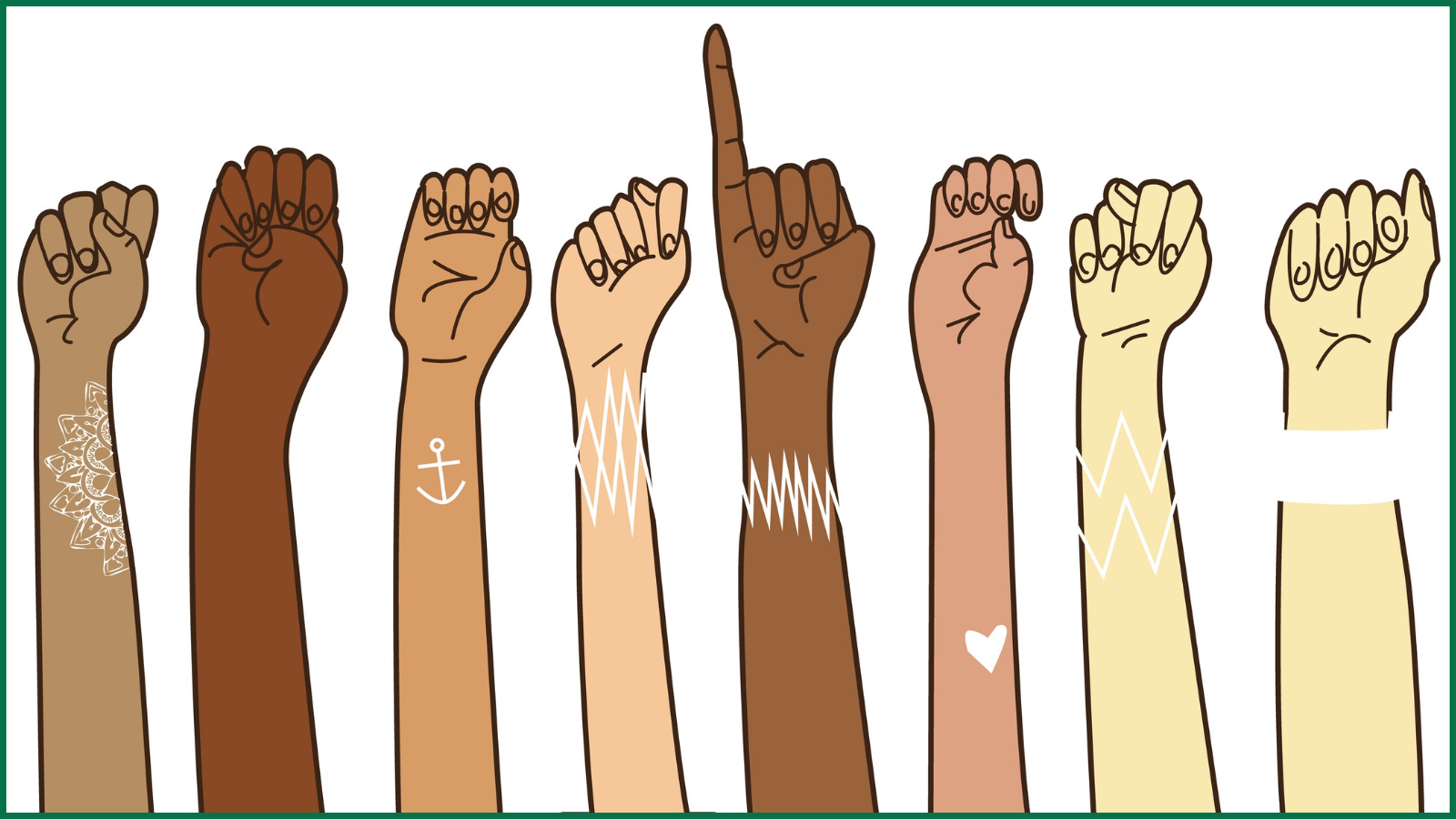
“Intersectionality” was coined by Kimberlé Crenshaw and elaborated on by Patricia Hill Collins and others to describe the interlocking of social prejudices, economic inequalities and political disadvantages that apply to a variety of historically oppressed people. For example, intersectional theory posits that a Black woman or a gay Asian will confront social and political obstacles contingent on their minority status and independent of economic class.
The concept of intersectionality is reasonable from the Marxist viewpoint. Marx himself observed a variety of race and gender-based discriminations amongst the working class in his own time. In factories, it was found that women and children could be exploited at lower wages than men.1 Amongst the English working class, the influx of Irish were reviled for their acceptance of lower wages and blamed for cheapening the labour market. And for the countries that had enslaved Africans for the plantation economy, Marx warned: “Labour cannot emancipate itself in the white skin where in the black it is branded.”2
Between the premises of intersectionality and classical Marxism, there is an overlapping understanding that class alone does not determine social standing within capitalism. The trend toward DEI hiring policies of corporations, diversity quotas at universities or inclusive on-screen representation is something that could have been predicted by Marx. As capitalism has matured and globalized, it has naturally acquired a more cosmopolitan flavour and more demands are placed on the system from an increasingly diverse crowd of consumers and workers. For this reason many capitalist multinational corporations and Hollywood studios have adopted diversity policies with enthusiasm.
As a result of diversity quotas, “woke” virtue signalling and the absorption of economic migrants by the West, antagonisms have arisen in society between majority and minority factions of workers, bureaucrats and entrepreneurs. Speaking of hostilities between ethnicities, Marx wrote:
This antagonism is artificially kept alive and intensified by the press, the pulpit, the comic papers, in short, by all the means at the disposal of the ruling classes…It is the secret by which the capitalist class maintains its power. And the latter is quite aware of this.
One can acknowledge the reality of historical oppression and simultaneously reject liberal remedies that seek to pit man against woman, coloured against white, queer against straight. Discrimination in any direction operates within the ruling class paradigm of artificial scarcity. Instead, socialism posits economic solutions of universal application: socialized housing, public healthcare, full employment targets and freely accessible higher education. Fair trading practices must be developed with Global South countries in order to eliminate exploitation and reduce the number of economic refugees.3
In the long run, it is only an economic base that strives toward universal abundance instead of capitalist profit that is capable of abolishing the social divisions manufactured by history. And that, I submit, is the Marxist position.
In sols,
Your editor.
Karl Marx, Capital: Volume One (Ancient Wisdom Publishing, 2019), 320.
Ibid, 195.
The international economy must be one that minimizes global poverty and reduces the demand of people to flee their homeland. Marx understood the challenges of accommodating large numbers of economic refugees in foreign societies and, in the case of the Irish, he attacked the root cause by demanding that Ireland be liberated from the claws of English landlords and capitalists.